

Inside a knowledge commons wiki page
Part 4 of an ongoing series on knowledge serving commons

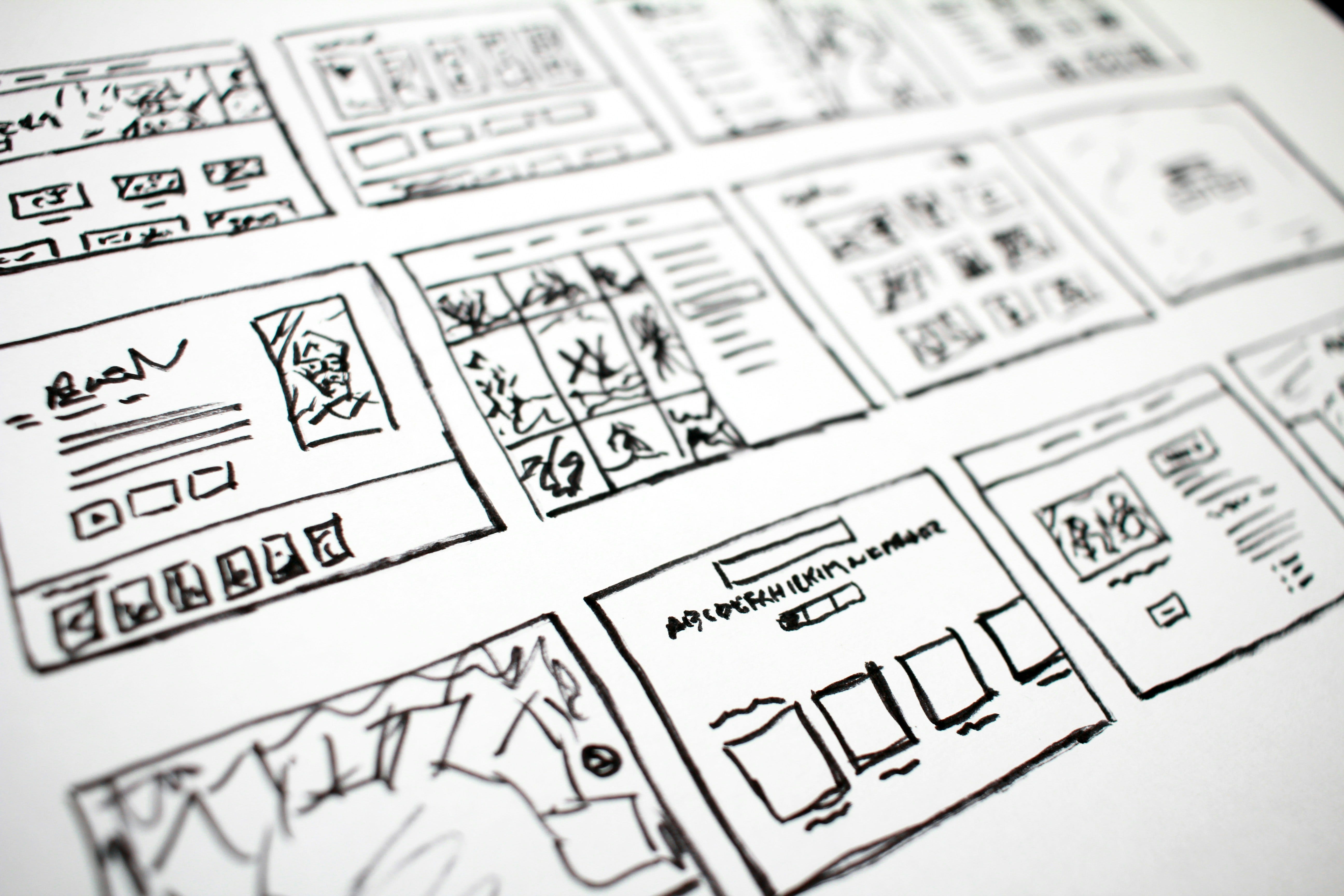
The ideas presented here originated on Simon’s personal wiki. We’re republishing them here on Growing the Commons to bring them into the broader Commons conversation. If you’d like to explore the full set of wiki-articles, you can find them here.
My previous post dealt with the kinds of pages I would expect – and suggest – in an effective knowledge commons wiki serving the commons more widely. Now I’m turning my attention to another important aspect of such a wiki: the internal structure of each page.
The level of ontology in the previous piece is about the kinds of entities that are significant in a commons. This level is more detailed, it is about the attributes (and some of the relationships) of each kind of thing. Now, of course, different people may see different attributes as significant, but there is a choice to be made, and here I’m expressing the choice I am suggesting, to represent what I consider to be the important aspects of the different things we are representing in the knowledge commons.
Surveying existing examples
Most wikis or other knowledge repositories have some regular or semi-regular structure to their pages, though this structure is most often implicit, not explicit. So let's start by looking at a few examples of page structures from other knowledge sites — specifically ones that I have come across personally, and are related to the kinds of knowledge relevant to the projects I’m involved with.
Appropedia has a fairly standard set of parts to its topic pages:
the introductory section (like Wikipedia does);
the main content (again, like Wikipedia) which varies according to the topic;
related projects documented in Appropedia;
external links for more information;
references (as in Wikipedia);
a whole table of “Page data” at the bottom, which essentially contains metadata about the page;
categories (as Wikipedia or any MediaWiki).
Lowimpact isn’t a wiki, but could be, and it has a standard set of parts to its pages. As I write, the core material is being transferred to the Growing the Commons wiki, so I’m taking this into account as well as (below) suggesting extensions. Lowimpact has:
a photo (or graphic) and a quotation;
the main information content, including:
definition (may be extensive);
something along the lines of “what are the benefits?”;
similarly, “what can I do?”;
people who are “specialists” in the topic and contributed information for the page;
comments — the pages were open to public comment, along with replies.
Quite a few pages in the P2P Foundation wiki are what Wikipedia would call “stubs”: for instance, just a URL pointing to the relevant information. Others just contain some kind of “Description”. The more fully worked out pages tend to have:
a one line statement, explaining the article title in a few more words;
a “Description” section, or similar, such as “Bio” for a person — for a published article, this will typically contain key quotations from the work;
some “Discussion”, where other writers are quoted — this is not open to general comment;
a “More Information” section, giving links and/or references;
categories (as it also uses MediaWiki software).
The School of Commoning (though inactive for nearly a decade) had a useful Community Knowledge Garden about commons and commoning. The pages are a set of individual essays, grouped by theme, but with internal structure limited to related pages and tags.
Compare with Wikipedia, which has detailed guidance on page layout that is very instructive and worth studying: it’s too long to reproduce here. However, amongst these other knowledge resources there isn’t much standardisation in page structure — as far as I can see, it’s just what occurs to the creators or contributors at the time. Wikipedia, having a vast amount of content, needs detailed guidance to avoid confusing readers with inconsistency, but Wikipedia’s detailed structure is neither necessary nor appropriate for the kinds of knowledge commons under consideration here.
So what should we take from all this?
Here, I'll set out my own best guess at a structure that will be appropriate in many cases, while not trying to lay down any kind of law. Treat it like a pattern in a pattern language. While not trying to impose a standard structure, it would be good to bear in mind that the more similar in structure pages are, the easier it is likely to be for people to feel comfortable reading them, as they will know what to expect and not be surprised by new features popping up with no warning. So here follow my suggested generic parts, which I see as probably suitable for the wikis I’m helping to formulate…
The initial part of each page
Useful information sources start by giving readers a good sense of whether this is the page they want to see; and if not, directing them to somewhere else if there is a similar related page that meets their needs better. Wikipedia sometimes starts with informing readers about “not to be confused with” pages, or disambiguation pages. This is important, to respect any reader's time and help them find what they want as easily as possible. There is a lot of good practice to follow here, particularly in well-worked resources like Wikipedia itself.
In academic writing, this function is mainly covered by the abstract. As this feature or pattern occurs in several forms, it's worth keeping in mind as useful.
Bear in mind that the initial part needs to be in proportion to the main content. What I learned about a précis was that it should be no longer than a third; or taking a lead from the idea of an executive summary, only 5% to 10% according to sources cited in Wikipedia.
Main content
This is the most obvious part of a page, as well as probably being the longest. Remember, though, that in a wiki it makes sense to have pages with a clear focus, rather than long pages that cover a range of material. This goes hand in hand with helping readers find their own level of information. If they come across terms that are unfamiliar, readers should be able to link from that term to a page where the term is explained at a more basic level; but preferably not as part of a larger page that they have to find their way through.
Also obviously, when another page in the knowledge commons is mentioned or referred to, or where it would be helpful, it makes sense to link directly to that other page. Again, this helps readers move easily to find what they want to know about. Any indication of what the link means may help as well. Current wiki technology can only easily do this in a human-readable way, but I look forward to developments where semantic links can be embedded so that a visual semantic knowledge graph can be generated automatically, and searched, for example through Graph Query Language.
The main content would naturally include, as appropriate, aspects that Lowimpact.org calls “what are the benefits?” and “what can I do?”. But because these headings may not be appropriate for other kinds of page, they would come within the main content, rather than being generally standard sections.
Related pages and links
Most knowledge resource pages have a section for links to related pages, particularly if these haven’t come up naturally in the main content. There doesn’t seem enough evidence to recommend any particular way of linking to other pages.
Pages can have links relating them to several other kinds of pages. This includes, for example, relating a page to the people who have collaborated in the writing and maintenance of the page. Then, instead of the common way of doing categories, each page can link to pages representing the categories it belongs to, with the category pages being much like normal pages, but with a wider remit. The point is that if categories are just pages, then every “category” can have all the same rich content as any other page, including freely linking to other categories. Some of the p2pfoundation wiki category pages are given a full treatment, however they still have the MediaWiki standard simple list of pages in that category. That long list of pages in the category seems useful only in limited ways.
Related resources may be part of the same knowledge commons, or may be outside it, and is a good question whether to list internal and external links together or separately. While I don’t see any general rule on this, it would seem sensible to have a separate page within the wiki for anything that is referred to more than once, thus prioritising internal links. One advantage of this pattern is that if the external resource moves or changes, there is just one link to change, and one place to edit the related information — and it is quite easy to find.
As mentioned already regarding main content, pages could be related either to pages with more basic or with more advanced knowledge, and ideally the level of information provided in the linked pages should be stated, so that readers get a sense of whether the level is appropriate for them. More advanced knowledge may sometimes be called “further reading” or similar. If the related pages are about the topic as a whole, it would make sense to have them linked either in the lead section at the top, or at the bottom. I try to practice this in my own wiki, where I put theme links at the very top of the page, and theme or topic links at the bottom in their own section, sometimes even if they have been linked in the main content.
Footnotes and references
This is a very well established pattern, both in paper books and articles and on the web, and it is worth preserving. My personal view is that, for references generally, it is a good idea to clarify just what role the reference is playing. Footnotes or endnotes, more than just bare references, offer a chance to give context to a reference.
One possible option would be to have related pages just for internal links, with all the external links in these footnotes or references.
Commentary
This is the main innovating section that I would like to propose here. As I detail below, a commentary section in a wiki page will only be available for registered, known people who either belong to the page curator team or are expressly invited by them. Comments from the general readership should be directed to a related forum.
In Wikipedia and other MediaWiki systems, there is space for a “Discussion” or “Talk” page alongside the main page, which is sometimes used and sometimes not. The purpose of the “talk” space is to allow contributors to give opinions or reasons or questions around the contents and editing of the page content. In Wikipedia it is expressly not for general discussion of the topic. In the evaluation of a Wikipedia page, it is often very useful to look at “talk” pages to gauge how much controversy there is or has been around a topic. Wikipedia is relatively well policed, but outside Wikipedia, if that space were simply open to all, it would rapidly become unmanageable and possibly unreadable — and very probably unhelpful.
The idea here is similar, but differs in some vital ways. First, the suggestion is to allow only registered contributors / curators to add their comments. By making this section an extra part of the actual page, rather than a separate page, it will let other readers immediately see any variety of perspective that there is on any topic, within the body of contributors. The hope is that by making different perspectives on a topic visible, readers are more likely to find commentary from contributors with similar viewpoints, and thus be drawn into a sense that the knowledge commons as a whole is familiar, not alien.
The other vital function of a commentary section is that contributors can use it to pose questions that arise for them, personally. Comments in the style of “yes, but what about … ?” can help open up different perspectives, opening up, but not needing to be integrated immediately into the main content. If a good unanswered question comes up, which several contributors feel is a growth point for the knowledge commons, the question can be promoted, first to the Questions section of the page it is on (see below), and if seen collectively as having wider relevance, to having its own page, as outlined in the “Question” section in my previous post.
Thus, the Commentary section is the first step towards working in questions to the knowledge commons ontology, and the broader commoning methodology.
Questions arising from the page content
This is another innovation, coherent with having select questions as pages in their own right. Following on from the Commentary section of a page, with questions brought up by individuals, we could have a separate “Questions” section, specifically related to the topic of the page, or the main content. This could be an intermediate stage between a question being raised by a contributor in the Commentary, and a question of common interest being given its own page. It would be for the group of page curators to decide collectively which questions brought up by contributors in the Commentary were worthy of promoting to the Questions section of the page, perhaps after further working over in a related forum.
Questions in this section of each page can be reviewed from time to time by a wider group of curators of the whole wiki, with the possibility of creating an open Question page of more general significance.
The use of these structures in different kinds of page
In every page there will be some basic material in the initial part of the page, whether it is a very brief indication of what is on the page, or it is simply pointing to where the knowledge resource is. What follows here are my suggestions, for what I see as likely to be useful. This doesn’t need to be fully fleshed out initially, but is here as a guide for possible development.
For resource pages, all of the sections above are relevant.
For concept pages, a definition can appear in the initial part of the page, so we may not need a separate main content unless the definition needs some explanation; or if the concept is defined by example, then some main content will be needed to set out examples. The related pages probably relate mostly to other concepts, patterns and questions.
For person pages of external people, not contributors, again all the sections could be relevant, with the main content being either biographical or descriptive of their main contribution to commons or commons thinking. If a suitable long-term resource adequately describe the person, then there may be no need for main content, and a link to the resource with a brief comment may be sufficient.
For person pages of contributors, the contributor will have control of what is in the page. It would make sense if they use the main content as personal autobiography; related pages as ones they have an interest in; and questions arising as the questions they have a longer term personal interest in.
For group pages, all the sections may be relevant, in a way similar to resource pages.
For place pages, the main content can be description and/or history of the place, if not adequately described elsewhere. Related pages can include related resources, people, groups and gatherings. Questions could relate to problems faced by the place, or questions about its future.
For gathering pages, the main content could be a description, plus any outcomes of the gathering. The related pages can be people who attend it, and groups that organise it; also its patterns of structure, organisation or governance. Questions could be both the questions addressed and the questions raised.
For story pages, the initial part could point to any published versions of the story. The main content could be a summary of the story, or the whole story if it has not been published elsewhere. Related pages could include people as authors, groups as publishers, related places. If the story has any patterns of commoning, these can be linked as well.
For practice pages, the main content could detail the best actual examples of the practice being implemented or lived. Related pages would at least include other related practices, and the more abstract patterns that this practice is seen as embodying.
For pattern pages, the main content could include at least a description of the context, problem and solution. Related pages could be practices embodying the pattern; other related patterns; concepts that occur in the pattern; and the people or groups who formulated the pattern.
For question pages, the initial part can succinctly express the question. The main content can explain it, giving any helpful background, including pointing to where the question arose. Related pages could include interested people and groups; broader or narrower questions; and links to other pages relating to what the question is about.
Patterns of knowledge commoning
This raises the question: what are the patterns, not of commoning of material resources as such, but the design patterns relating to knowledge commoning? That deserves separate treatment, and I intend to return to that, later.
Note: This will be our last post for this year. We are looking forward to connect with you again in the new year!
Fantastic deep dive into wiki architecture for commmons. The commentary section concept really solves something most wikis struggle with, creating space for perspectiv diversity without turning into a free-for-all. I've seen knowledge bases fail becuase they either become echo chambers or get overrun with noise. The graduated question system (from commentary to questions section to standalone page) is kinda genius for surfacing collective priorities without losing individual insights.