


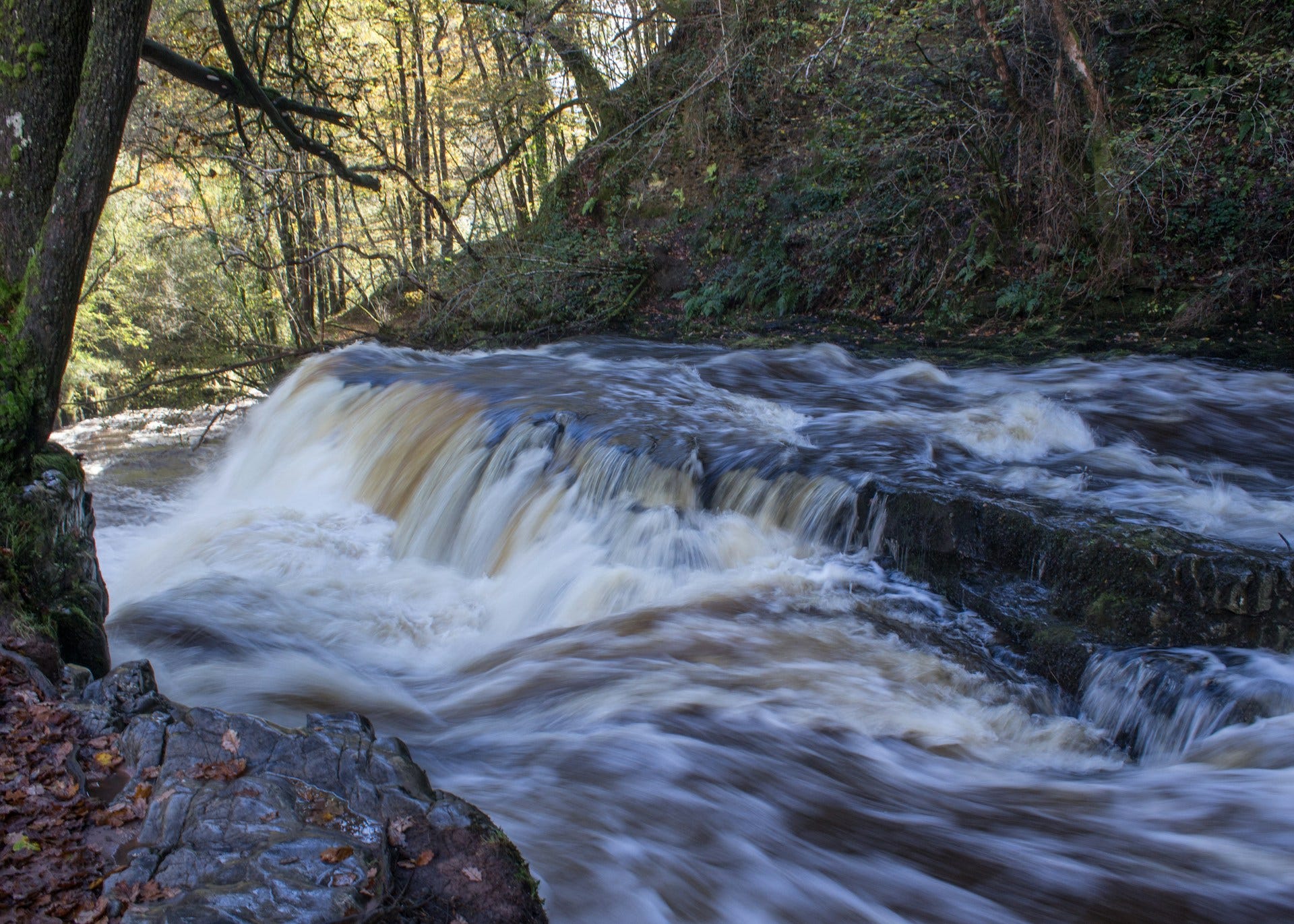
There are many global emergencies. But Julian Jones of Water21 believes they all share a single neglected cause— and that the beginnings of solutions can be found close to home.
Climate, public health, flooding, drought, social inequality, displacement and economic instability. Presented separately, they leave us individually helpless. Yet a common failure runs through nearly all of them—and the beginnings of a solution is within our collective grasp. That failure is a lack of care. Not simply caring about something as sympathy or sentiment. I mean practical, active care: accepting responsibility for the people, places and resources that sustain us. I first began to understand this as a child in Stroud, through the metaphor—and practical reality—of our declining local rivers.
Meeting Harry
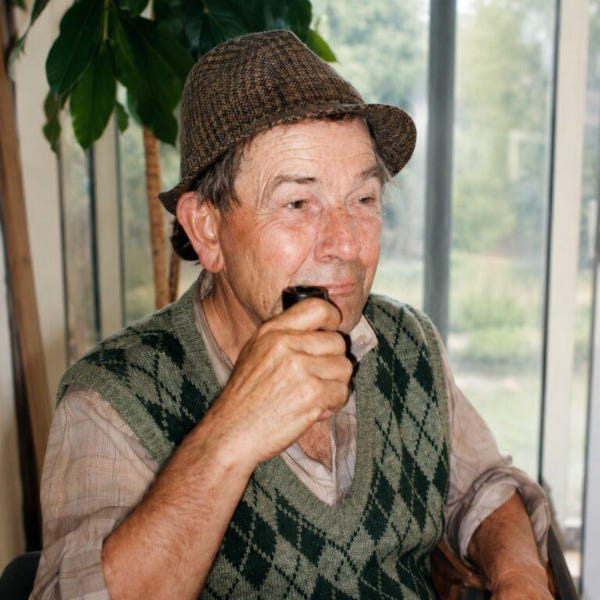
Like many people in Stroud, I was an incomer. Born near London, I arrived in the late 1960s, when smokestack industries, grime and deprivation were still very visible here. I came for a conventional private education. The education that mattered most, however, began when I started sneaking away from school to fish in the local river. One day, an angry older man ran towards me, shouting some fairly vile instructions to clear off. His name was Harry Tomlins. He was the maintenance foreman at a mill in Dudbridge. Harry had no greater claim to the fishing than I did, but he possessed two things I did not. He took responsibility for the river’s wellbeing, and he also depended upon it. The few trout still hanging on in the watercourse were an occasional but important addition to his family’s diet. I resolved to make friends with him. This was not easy. Years of sheet-metal work had badly damaged his hearing, and I learned to shout my words close to his ear. A high-pitched whistle could attract his attention from some distance away. We eventually became inseparable. During our first year of fishing together, Harry would accompany me and watch, but he never revealed the best places. Trust had to be earned. What he did share was knowledge of the river: how water moved through the mills and sluices; eventually where fish sheltered; how the channels should be maintained; and how one neglected problem would produce consequences far downstream. His knowledge had been passed on between generations and tested through direct experience. He applied it wherever he could, always with the wider community in mind. In another culture, such exacting environmental knowledge might have been revered. Harry would have been horrified by any suggestion that he was a mystic. There was no “woo” in his character—only competence, calmness and a weary recognition of the damage caused when those responsible for a place no longer understood it. He also noted this at the mill where he worked; which also failed.
The return of the salmon
Harry explained how salmon once travelled up from the Severn Estuary into our local waters. He believed their return should become a measure of the river’s recovery. For us, the salmon became something approaching a cult, although we appeared to be its only two members. Our creed was simple. We fished for food rather than amusement, and we should actively assist the recovery of a remarkable renewable source of protein that had once been abundant in British rivers. The salmon’s importance extended beyond food. Migrating fish transport marine nutrients into freshwater catchments. Their completed life cycle underpins the ecological relationships between soil, land, wildlife and river. Nearly four decades ago now, Harry was staying with his son beside a Scottish river. His entire family was all gathered there. That morning, he spotted a salmon. By evening, he had caught it and cooked it for their dinner. Harry then passed away.
It seemed an almost impossibly complete ending to his life: a river providing for a family once more, with Harry remaining in service until the end. The salmon have still not returned to our Stroud rivers. That quest remains unfulfilled.
Being in service
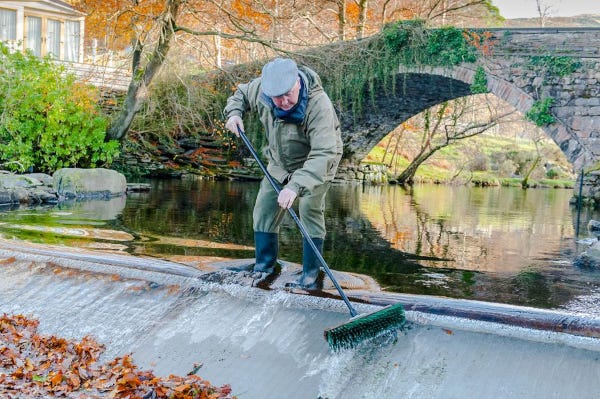
Harry described his approach as being “in service”—not only to the environment, but to other people. His lessons were rarely abstract. “If you see a large branch floating down the river,” he once told me, “don’t stand there watching it. Drag it out. There might be a sluice gate downstream that it could smash open and cause a flood. Jump in if needs be. You might get some useful firewood.” The lesson was not simply about a branch. It was about acting before responsibility needed to be passed to somebody else. Natural systems operate through such innumerable relationships and exchanges. Their abundance is not created by each element pursuing complete independence from everything around it. It arises through connection, reciprocity and obligation. Human communities could work in much the same way. Around the time Harry was educating me beside the river, thinkers around Stroud were articulating similar principles. The Reverend John Papworth (buried in Slad, 2020), Gloucester economist Leopold Kohr and E. F. Schumacher explored the limits of scale and centralisation. Schumacher’s ‘Small Is Beautiful’, published in 1973, questioned the assumption that bigger institutions and technologies were necessarily more efficient or humane. Much later, Nobel Prize winning US economist Elinor Ostrom demonstrated that communities best govern environmental resources—provided that appropriate local relationships, rules and responsibilities are allowed. Harry would not have described himself as an economist, environmentalist or political philosopher. He simply knew that somebody had to look after the river.
From protest to practical care
Today, protest has become one of our principal expressions of care. Protest gives voice to what is being ignored and allows people to resist destructive decisions. But protest alone does not restore a river, manage a farm, maintain a wetland or construct a community energy system. It must be accompanied by practical stewardship. Another remarkable Stroud incomer, the late Polly Higgins, 2015, made the eradication of ecocide her life’s work. She asked us to judge our actions against a “higher moral responsibility” to the living world. The difficulty is that environmental right and wrong cannot effectively be determined from slogans. It requires experience, evidence and close knowledge of place. Harry had all three.
Local energy and local wealth
The water mill Harry maintained had stopped using water power decades earlier. “If we are daft enough to ignore all this free river energy,” he told me, “we shall go bankrupt.” I have spent much of my working life specialising in water engineering, including small hydropower, through the not-for-profit organisation Water21. Small hydropower is not remotely the same as the enormous dams that displace communities and disrupt whole river systems. Properly designed community-scale schemes can generate energy while protecting—and if operated carefully, significantly improving—local river environments. The greater value comes when the means of production are owned locally. At Ynni Ogwen in North Wales, a community-owned 100kW hydro system supplied by Water21 began generating in 2017. Income from the scheme has funded solar panels on community buildings and an energy warden who assists households experiencing fuel poverty; the financial returns being multiplied many times over. That is renewable energy doing more than reducing emissions. Creating a continuing relationship between a natural resource, local employment, social welfare and growing community wealth.
Closer to home, the all metal 500kW wind turbine at Lynch Knoll near Nympsfield first generated electricity in December 1996. Its longevity demonstrates the value of renewable infrastructure designed to be maintained rather than rapidly discarded. Other than replacing wearing parts – it looks good for another 30 or more years of valuable power generation. The renewable potential of our rivers may be relatively modest. But the principle is immense: renewable resources can meet local needs while keeping a greater proportion of their economic value within the community.
Sewage is also a resource
Harry worried about public health as much as energy. We regularly fished by the former French Water Gardens at Stanley Downton, an early hydroponic farm through which the main sewer passed. Harry’s reaction was characteristically direct: “Are our authorities so daft they cannot see that places like this could deal safely with all that sewage nutrient—and grow something useful?” Wastewater does not cease to contain water and nutrients merely because we have decided to call it waste. Constructed wetlands, reed beds and other nature-based systems can treat polluted water while creating habitat, useful biomass energy and other benefits; at greatly reduced costs. I reached an agreement in principle with the chairman of the local water company in 1989 to explore such an approach. A wider scoping plan was eventually produced in 2003. It has still not been implemented. Since June 2025, water companies have been legally required to explain how nature-based solutions are being considered in their drainage and wastewater management plans. That is progress, but consideration is not yet delivery. We remain as a society committed to “flush and forget”: moving polluted water away, concentrating it elsewhere and then paying heavily to manage the consequences. I have failed—but not because the solutions failed. Measured against Harry’s simple test—the return of salmon to our river—I have failed. Many of the projects Water21 has worked on have demonstrated what is technically possible. But isolated projects do not transform an entire catchment, and one person cannot create the culture of responsibility that Harry represented. That is the point. The emergency cannot be resolved by heroic individuals, remote institutions or technological interventions imposed upon passive communities, worldwide. It requires us to recover the practical meaning of being in service—to our rivers, landscapes and each other. The solutions are not all distant, experimental or unaffordable. Many are already here: local renewable energy, community ownership, healthy soils, wetlands, restored watercourses and the recovery of nutrients presently treated as waste. What is missing is not knowledge.
It is the collective willingness to accept responsibility. Harry taught me that you do not wait for an authority to remove the dangerous branch. You step into the river. The emergency is here, now.
Julian Jones, www.water21.org.uk
